
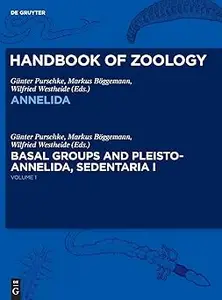
Free Download Günter Purschke, "Annelida Basal Groups and Pleistoannelida, Sedentaria I"
English | ISBN: 3110291460 | 2019 | 492 pages | PDF | 20 MB
This book is the first in a series of 4 volumes in the Handbook of Zoology series about morphology, anatomy, reproduction, development, ecology, phylogeny and systematics of Annelida.
This first volume covers members of the so-called basal radiation and the first part of Sedentaria. It is supplemented by chapters on the history of annelid research, their fossil record, and an introduction to the phylogeny of annelids and their position in the tree of life. In the latter chapter the history of their systematic is reviewed giving an almost complete picture of systematic-scientific progress especially in the past years which changed our view on annelid phylogeny dramatically. The most basal annelids, lately united as Palaeoannelida, represent two families of aberrant polychaetes formerly often suggested to be highly derived which now give us a fresh look on how the ancestral annelid may have looked like. These lack certain key characters such as nuchal organs and possess rather simple nervous systems which now likely represent primitive character states. In this basal radiation the first taxon of apparently unsegmented and achaetigerous animals is positioned, the Sipuncula. Most likely another group of platyhelminth-like and unsegmented and even chaeta-lees annelids, Lobatocerebridae falls into this basal radiation. The section of Sedentaria starts with Orbiniida, a taxon characterized by elongated, thread-like worms which do not have anterior appendages like palps and comprises several families representing members of the Meiofauna. These minute worms often inhabiting the interstitial spaces in marine sands are suggested to have evolved by progenesis. The second higher taxon is represented by Cirratuliformia comprising nine families of typical sedentary polychaetes each of which showing a remarkable variation of the annelid body plan. Members of this taxon usually exhibit many annelid characters but certain also lack the most typical prostomial appendages, the palps.
Read more
Recommend Download Link Hight Speed | Please Say Thanks Keep Topic Live
Links are Interchangeable - Single Extraction