

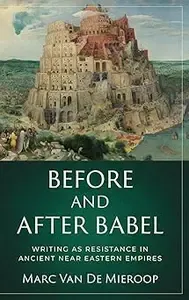
Marc Van De Mieroop, "Before and after Babel: Writing as Resistance in Ancient Near Eastern Empires"
English | ISBN: 0197634664 | 2023 | 358 pages | AZW3 | 6 MB
"The Lord confused the language of all the earth," so the Tower of Babel story in the Hebrew Bible's book of Genesis tells us to explain why the world's people communicate in countless languages while previously they all spoke only one. This book argues that the biblical confusion really happened in the ancient Near East, not in speech, however, but in writing. It examines the millennia-long history of writing in the region and shows a radical change from the third and second millennia to the first millennium BC.
Before "Babel" any intellectual who wrote did so as a participant in a cosmopolitan tradition with its roots in Babylonia, its language, and its cuneiform script. After "Babel" scribes from all over the eastern Mediterranean, including Greece, used a profusion of vernacular languages and scripts to express themselves. Yet they did so in dialogue with the Babylonian cuneiform tradition still maintained by the successive Assyrian, Babylonian, and Persian empires that controlled their world, oftentimes as acts of resistance, aware of cosmopolitan ideas and motifs but subverting them. In order to frame the rich intellectual history of this region in the ancient past
Recommend Download Link Hight Speed | Please Say Thanks Keep Topic Live
Links are Interchangeable - Single Extraction